


Kids Coloring Book by Numbers
4.3100.00 Reviews
App Specs
- Version
- 3.9
- Updated On
- License
- Free
- Downloads
- 100,000+
- Developer
- GOBEEZ YAZILIM TİCARET
- Categories
- Educational
- Platform
- Android
Screenshots
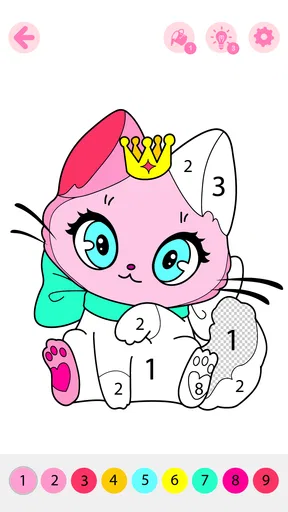

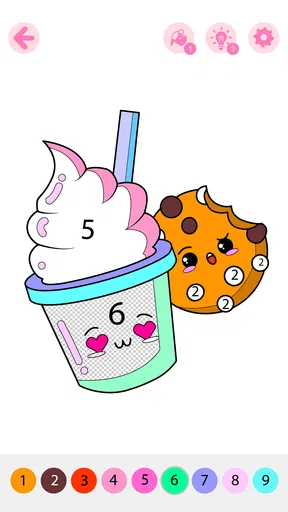
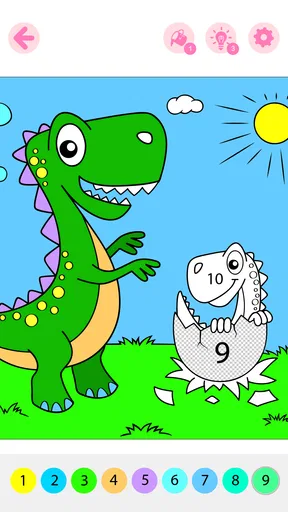
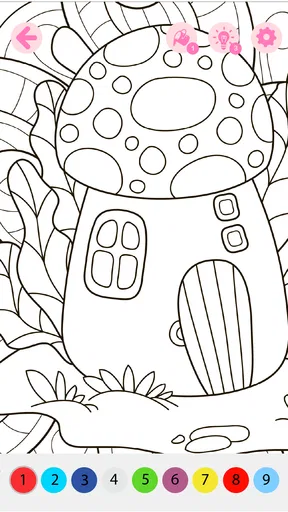
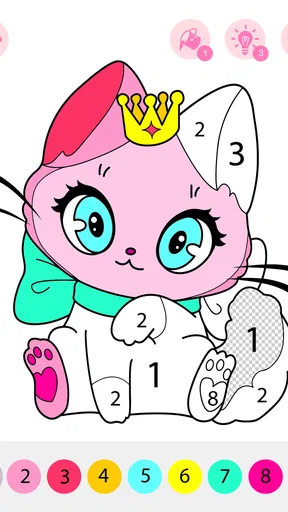


 Analysis by AppCompare
I approached Kids Coloring Book by Numbers as something to use alongside a child rather than as a game that demands constant adult supervision. Its central idea is easy to understand: children color illustrated pictures by following numbered areas. That simplicity is the reason it feels approachable from the first tap, but it also means the quality of the experience depends heavily on presentation, pacing, and how willingly a child accepts guided coloring instead of completely free drawing.
In my experience, the game works best during a quiet afternoon, after dinner, or as a short activity when a child wants to make something but is not ready for a complicated creative app. It belongs to the educational coloring game category, and its strongest quality is the way it turns recognition and careful attention into a relaxed creative routine. I would recommend trying it with a child who enjoys pictures, colors, and small goals more than fast action.
A gentle first impression built around guided creativity
The first thing I noticed is that the game does not ask a young player to understand a complicated ruleset. The numbered coloring format gives every picture a clear starting point: find the matching number and fill the corresponding section. That makes the activity less intimidating than a blank canvas, especially for children who say they do not know what to draw or become frustrated when their first attempt does not look the way they imagined.
There is also a useful emotional difference between this format and a conventional puzzle. The child is not simply trying to reach an answer and move on. The picture gradually becomes more complete, so the reward comes from watching a familiar outline turn into a finished image. That small sense of progress can make the activity feel purposeful without turning it into a stressful test.
I would still set expectations correctly. This is not a full digital art studio, and it is not designed to replace open-ended drawing. The numbered structure narrows the creative choices, which is a strength for beginners but a limitation for children who want to invent their own characters, choose every color, or experiment freely with brush styles. The right question is not whether it offers unlimited artistic freedom, but whether guided coloring is the kind of calm challenge your child currently enjoys.
The game is free to start, with optional in-app purchases ranging from $9.99 to $149.99 per item. That makes it easy to test the basic experience before deciding whether it belongs in your family’s regular rotation. I would let an adult handle any purchase decisions and spend a little time with the child first, because a free download can still become less suitable if the available content or progression does not match what the child expects.
Kids Coloring Book by Numbers is marked for Everyone, and its developer is GOBEEZ YAZILIM TİCARET. It was released on September 18, 2019, and the current version is 3.9. The game runs on devices using Android 5.1 or later, so it can be a practical option for families using an older compatible phone or tablet rather than a recently purchased device.
Worth Reading Before You Choose

EA SPORTS FC Mobile 26 Is a Bigger Football Game, but It Takes Time

Flipboard Shows What News Apps Must Do Beyond the Feed

Switching to Android Auto Means Rethinking Your Driving Routine

Google Calendar Makes a Crowded Week Easier to Manage

Ludo King Makes the Most of the Minutes Between Plans

Baby Panda World Brings Quick Play to Modern Phones, but Its Game Library Feels Busy
What a normal session feels like
A realistic session might begin with a child choosing a picture while sitting beside a parent on the sofa. Instead of handing over a blank page and asking what to create, I would suggest choosing one image and completing it slowly. The child can look for a number, tap the matching color, and work through the picture in small sections. If attention starts to drift, stopping after a partially completed image is less discouraging than abandoning a long level with a complicated objective.
This is one of the less obvious benefits of the format: it can be divided into natural pauses. A parent can use one picture as a short transition between activities, or let the child finish a longer image when there is more time. I would not treat every session as something that must end with a completed picture. The habit of returning to a creative task is more valuable than pushing through when the child is tired.
For preschool and early-school children, the numbered areas can support visual matching and concentration. Older children may find the easiest images too predictable, so the game is more likely to remain useful when they enjoy coloring itself rather than needing a strong sense of challenge. It can also suit siblings with different confidence levels because each child can work at a personal pace, although the appeal may not be equal for everyone.
How the visual world communicates without overcomplicating play
The art direction is functional in a good way. The pictures are built to be read by a child: areas need to be distinguishable, numbers need to guide attention, and the finished image needs to feel rewarding enough to justify the careful work. That creates a visual language based on clarity rather than realism. I found that this is important because excessive detail would make the activity feel like a tiny precision task, while overly plain images could make the result feel empty.
The setting is not a story world with characters who need backstory or a map that has to be learned. Instead, the picture itself becomes the setting. Each illustration provides a small visual destination, and the child’s job is to reveal it through color. This keeps the focus on the act of filling spaces, which is exactly why the game can work as a relaxing activity rather than a narrative adventure.
That approach also explains the game’s limits. Children who need a strong fictional world, dialogue, exploration, or a sense of role-playing may quickly look elsewhere. A traditional drawing app offers more personal expression, while a story-driven educational game can provide stronger context for learning. Here, the visual pleasure comes from completion and color coordination, not from discovering a larger universe.
One practical tip is to encourage the child to look at the entire picture before beginning. It is tempting to tap the first visible number repeatedly, but a quick glance at the outline helps the child understand how separate parts will eventually connect. I found this changes the activity from random tapping into a simple planning exercise. It also gives parents a natural opportunity to talk about shapes, objects, color choices, and what the finished scene might represent.
The numbered design creates a particular kind of visual discipline. The child is not choosing colors entirely independently, but is learning to associate symbols with areas and then apply the result carefully. That can be useful for children who benefit from clear instructions. On the other hand, I would avoid presenting the “correct” color as the only acceptable form of creativity. After finishing a picture, a parent can ask what color the child would choose in a free drawing, preserving imagination alongside the guided task.
Small visual decisions that affect patience
In a coloring-by-number game, tiny areas can change the mood of a session. Large sections offer quick progress and help a child feel successful early. Smaller sections demand more patience and hand control, which can be satisfying for some children but irritating for others. I would watch how the child reacts rather than assuming that a harder-looking picture is automatically better for learning.
Another useful approach is to let the child choose based on mood. A picture with broad, simple areas may be better when the child is restless. A more detailed image can suit a quiet period when the child wants to concentrate. This is a more effective use of the game than treating every picture as an identical exercise. The same app can feel soothing one day and tedious the next, depending on the child’s energy.
Because the visual system supplies direction, the game can also help a child who is reluctant to start creative work. There is no pressure to produce an original composition immediately. The child receives a sequence of manageable decisions, and the completed picture provides visible evidence that those decisions added up to something. That is a modest but real confidence-building loop.
Sound, rhythm, and the calm mood of the activity
The game’s mood comes primarily from its unhurried coloring rhythm. Each action is small, understandable, and connected to the next one. That pacing matters more here than dramatic effects would. A fast, noisy presentation could make the experience feel like an arcade game and undermine the quiet concentration that makes guided coloring attractive in the first place.
I see the sound design as something that should support the child’s attention rather than compete with it. In a family setting, that distinction is important. A coloring activity often happens while an adult is nearby, perhaps reading, preparing food, or helping another child. A calmer rhythm makes it easier to keep the game as part of a shared environment instead of turning it into the loudest thing in the room.
Parents should still decide when and where to use it. A child who is already overstimulated may not become calm simply because the activity is educational. Likewise, a child who needs movement may find the slow pace boring. I would use it as one option in a varied routine, not as a universal solution for restlessness or screen-time arguments.
The rhythm also affects how long a session should last. Because the game is based on repeated actions, it can become pleasantly absorbing, but repetition can eventually feel mechanical. A short break after completing a picture helps preserve the positive mood. I prefer ending while the child is still interested rather than waiting until the activity becomes a source of complaints.
One practical family workflow is to use the game as a shared conversation prompt. While the child colors, I would ask which section looks most interesting, what might be hidden in the unfinished outline, or how the picture could look in a real place. This adds language and observation without interrupting the basic mechanics. It also prevents the child from treating the activity as nothing more than tapping until every area disappears.
Why pacing matters more than complexity here
Many educational games try to keep attention with levels, timers, badges, or frequent rewards. A coloring-by-number experience has a different advantage: it can hold attention through gradual visual change. That is less forceful, but it may be better suited to a child who dislikes pressure. I would choose this game over a timed alternative when the goal is to practice staying with one task rather than reacting quickly.
The trade-off is that the game may not provide enough variety for a child who needs constant novelty. If your child asks for new mechanics every few minutes, a broader creative suite or a more interactive learning game may be a better choice. Kids Coloring Book by Numbers is strongest when the repeated action itself feels satisfying.
It is also worth remembering that sound and pacing are only one part of the experience. The child’s response to the images matters more. A peaceful rhythm cannot rescue artwork that does not interest them, while an appealing picture can make a simple interaction feel surprisingly engaging. I would let the child try several sessions before judging whether the mood fits.
Where the mechanics fit, and where they fall short
The main mechanic is easy to explain: match a number with the appropriate area and color it. That makes the game accessible to young players and gives adults a clear way to help without taking over. If a child cannot find the next section, I would offer a verbal clue instead of tapping it immediately. The small delay encourages visual scanning and keeps the child involved in solving the task.
This mechanic is particularly suitable for children who benefit from bounded choices. A blank drawing screen can create decision overload, while numbered coloring reduces the number of decisions at each moment. The child still participates in making the image, but the app provides enough structure to prevent the familiar “I don’t know what to do” reaction.
There is a fine motor benefit as well, although I would describe it carefully. Tapping and coloring small areas can encourage controlled screen interaction, but it should not be treated as a substitute for physical coloring, cutting, building, or handwriting practice. A tablet gesture is not the same as holding a crayon. I would pair the game with paper and real art materials if the broader goal is hand development.
The strongest advanced-use tip is to change the adult’s role over time. At first, a parent can help identify numbers and explain the sequence. Later, the child can take responsibility for choosing the next area, checking the match, and deciding when the picture is complete. This turns a simple game into a gradual independence exercise without adding artificial difficulty.
The mechanic is less suitable for children who want to make mistakes safely and see unusual results. Since the numbered system guides the intended outcome, it does not offer the same experimentation as a free-coloring app. A child who enjoys mixing unexpected colors or drawing outside the lines may feel constrained. In that situation, I would use this game for focused sessions and keep an open drawing tool available for genuine invention.
Who should try it and who should choose something else
I think it is a good fit for young children who enjoy visual matching, calm repetition, and the satisfaction of completing a recognizable picture. It can also work well for a parent looking for a low-pressure activity to share with a child. The Everyone age rating makes it broadly approachable, but age suitability still depends on patience, screen habits, and the child’s interest in coloring.
I would be more cautious about recommending it as a primary game for older children who expect complex goals, competitive play, or a large amount of personal control. They may prefer a full drawing application, a more advanced puzzle game, or an educational title with deeper subject matter. The fact that the game has passed 100K+ installs and holds a 4.3 average from around 924 ratings suggests that it has found an audience, but popularity does not guarantee that its quiet format will suit every child.
It is also not the best choice when you need completely offline, paper-like creativity, because a digital coloring-by-number activity remains dependent on the device and its interface. Nor would I choose it when the child is specifically asking to learn drawing techniques. The game teaches attention, matching, and completion more directly than it teaches how to sketch, shade, compose, or develop an original visual style.
Compared with ordinary coloring books, it offers guidance and immediate digital feedback, but loses the tactile feel of paper and crayons. Compared with open-ended coloring apps, it is easier to begin but less expressive. Compared with fast educational games, it is slower and less stimulating, yet potentially better for a child who benefits from a calmer pace. Those trade-offs define its place more clearly than a simple list of features.
My final view of the atmosphere and the value
After looking at the visual approach, the gentle rhythm, and the straightforward mechanics together, I see Kids Coloring Book by Numbers as a focused activity rather than an all-purpose children’s app. Its art direction supports the task, its pacing encourages patience, and its numbered system removes the fear of not knowing where to begin. The experience feels coherent because every part points toward the same outcome: slowly turning an outlined picture into a finished one.
The limitations are equally clear. The guided format can feel restrictive, repeated coloring can lose its appeal, and children looking for stories or unrestricted drawing will probably outgrow it quickly. Optional purchases also mean adults should review the experience before allowing a child to explore it freely. I would begin with a short shared session, observe whether the child enjoys the process rather than only the finished image, and then decide whether it deserves regular use.
For me, the best use is a calm, supervised creative break: one picture, a little conversation, and no pressure to keep going after attention fades. It can support visual matching and persistence, but its real strength is mood. When a child wants something peaceful and achievable, the game provides a clear path from first tap to completed artwork.
GOBEEZ YAZILIM TİCARET has kept the concept accessible across a wide range of compatible Android devices, and the free entry point makes experimentation straightforward. I would recommend it to families seeking a gentle coloring activity, especially when a child prefers guided choices to a blank screen. I would skip it for children who need deep creative control or constant mechanical variety. Used for what it is, a patient and approachable digital coloring companion, it can earn a useful place in a child’s occasional screen-time routine.
Pros
- Simple number-based coloring is easy for young children to understand.
- Bright visuals make completed pictures feel rewarding.
- Works well as a quiet activity during travel or downtime.
- Many pages can be enjoyed without artistic skills.
- Helps children practice color recognition and basic number matching.
Cons
- Some pictures may feel too repetitive for older children.
- Small areas can be difficult to fill accurately on smaller screens.
- Certain content or tools may require in-app purchases.
- Ads can interrupt play in the free version.
- Limited creative freedom compared with a blank coloring canvas.
FAQs for Kids Coloring Book by Numbers
What is Kids Coloring Book by Numbers?
Kids Coloring Book by Numbers is a child-friendly coloring app that combines simple paint-by-number activities with bright illustrations. Children select a picture, choose the matching numbered color, and fill each section by tapping on the screen. The format is designed to be easy for beginners while encouraging concentration, color recognition, creativity, and patience during short, relaxing play sessions.
Is Kids Coloring Book by Numbers suitable for young children?
The app is generally suitable for preschool and early-school-age children because its controls are simple and most activities do not require reading advanced instructions. However, the ideal age can depend on the child’s ability to recognize numbers and use a touchscreen accurately. Parents should review the age rating, available content, and any advertising before allowing independent use.
Does the app require an internet connection?
Basic coloring activities may work without a continuous internet connection once the application and available picture packs have been loaded. Nevertheless, an internet connection may be needed for downloading additional images, displaying advertisements, restoring purchases, or receiving updates. Families who want offline use should open the app beforehand and check which coloring pages are already available.
Are there advertisements or in-app purchases in Kids Coloring Book by Numbers?
Depending on the version and platform, Kids Coloring Book by Numbers may include advertisements, optional purchases, or locked picture collections. These elements can affect the experience, particularly for children who may tap promotional buttons accidentally. Before downloading, parents should check the official store listing, review purchase settings, and activate parental controls or password protection where available.
Is Kids Coloring Book by Numbers safe and educational for children?
The app can provide a safe and useful creative activity when used with suitable parental supervision. Coloring by numbers supports hand-eye coordination, attention, number identification, and basic color learning, although it should not replace open-ended drawing or other educational play. Parents should also check privacy information, permissions, external links, advertisements, and screen-time settings before handing over the device.


